
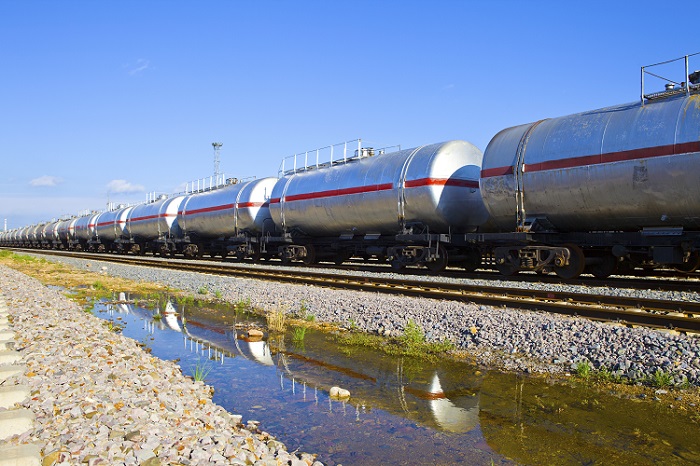
Amid growing concerns about the potential dangers associated with trains carrying fuel, the National Transportation Safety Board is calling for ramped up safety measures. Citing the troubling performance of tank cars involved in four recent oil train derailments, the agency on Monday announced mandated fire protection equipment for the nation's fleet of railroad tank cars hauling crude oil and ethanol within five years.
Federal safety officials called on the US Department of Transportation’s Pipeline and Hazardous Materials Safety Administration to require oil- and ethanol-carrying tank cars to be equipped with a ceramic blanket and high-capacity pressure-relief devices. They also endorsed a five-year timeline for retrofitting or replacing the tank cars, with a minimum 20 percent of the fleet being brought into compliance each year approaching the five-year deadline.
The five-year goal is considered an aggressive one by many industry leaders who say that a more reasonable goal is 10 years. NTSB officials disagree. At particular issue are recommended upgrades to the DOT-111, considered the nation's workhorse tank car - upgrades that safety officials have been pushing for over the past 20 years. The car's design is believed to have been a contributing factor in several devastating incidents including an oil train derailment that killed 47 people in Quebec in July 2013, as well as derailments of four separate trains carrying different type of crude oil in Ontario, West Virginia and Illinois over a four-week span.
"We can't wait a decade for safer rail cars," NTSB Chairman Christopher Hart said in a prepared media statement. "The industry needs to make this issue a priority and expedite the safety enhancements. Otherwise, we continue to put our communities at risk."
We here at Rail Justice support efforts to improve the safety of America's railway operations and the protection of the industry's workers and passengers.
